
A Look Back on Carbon Literacy

Updated: Feb 28

By Haylee Rea
Summer is upon us; the birds rise early with the lengthening days and the mercury climbs the thermometer here in sunny San Diego. The world churns on as it always has, every day bringing new opportunities.
I was fortunate enough to be presented with one such opportunity back in November of 2024, when I enrolled in the Carbon Literacy course put on by In Good Company. I was at a crossroads in my life as an advocate for change; I was looking for the next step that could elevate me professionally, though I hadn't the time or finances to go back to school or enroll in a 6+ week development course.
Enter the Carbon Literacy certification, held in small groups with a balance of listening and engagement to produce meaningful discussions amongst the enrolled students. The content was easily digestible and connected back to real world scenarios. The course ended with each student making two pledges to reduce carbon emissions: one group action and one individual action.
I'll admit here that, for a moment, I mentally dismissed the thought of needing to commit to yet another action for a healthier planet. In my mind, I was already living sustainably enough, I didn't want to shoulder the responsibility that rests with large corporations. Sadly, I fell victim to thinking I had done enough, and that I had reached some invisible sustainability finish line. After all, I don't eat meat, I thrift most of my clothes, I recycle, compost, and take public transit to work. Surely it's not me who needs to pledge action.
The course illustrates the power of collective action, alleviating the feelings of overwhelm and loneliness that come from being too aware of the state of the planet.
This line of thinking is precisely why the Carbon Literacy training is so impactful. By connecting the message to direct actions aimed at the individual and the community, students of the course are able to think critically about where they fit as a puzzle piece in the big picture. The course illustrates the power of collective action, alleviating the feelings of overwhelm and loneliness that come from being too aware of the state of the planet.
So I made my pledges, writing out in detail how I would commit to reducing my carbon footprint. I took a step back and critically analyzed my life, accepting that there is no finish line in living sustainably. I scoured my daily routines to find where I could improve, even though I wasn't convinced that I was the one who needed change.
I arrived at my individual pledge: to ride my bike to the gym instead of drive. It's an easy five mile journey each way, mostly flat, and the gym is for exercising anyway, I rationalized. I made the pledge, received my Carbon Literacy certification, and did...nothing. Throughout the winter months I convinced myself that it was too dark to ride, too cold, too rainy. I told myself I was sustainable enough, switching one trip from car to bike wasn't all that impactful.
Until one spring day, when I finally decided I'd give it a try. No one was holding me accountable except myself, and how good was my word if I so easily made empty promises? I packed all my gym essentials in a backpack and hit the road on two wheels. It was glorious: the sun on my skin, the wind in my face, getting onto the bike path and riding along a river, free from exhaust, stoplights, and distracted drivers. On top of that, once I arrived at the gym my cardio was already complete, leaving me free to focus on other elements of fitness.
Since that fateful day a few months back, I have not driven to the gym once. In fact, I don't even consider taking my car, there's no positive tradeoff.
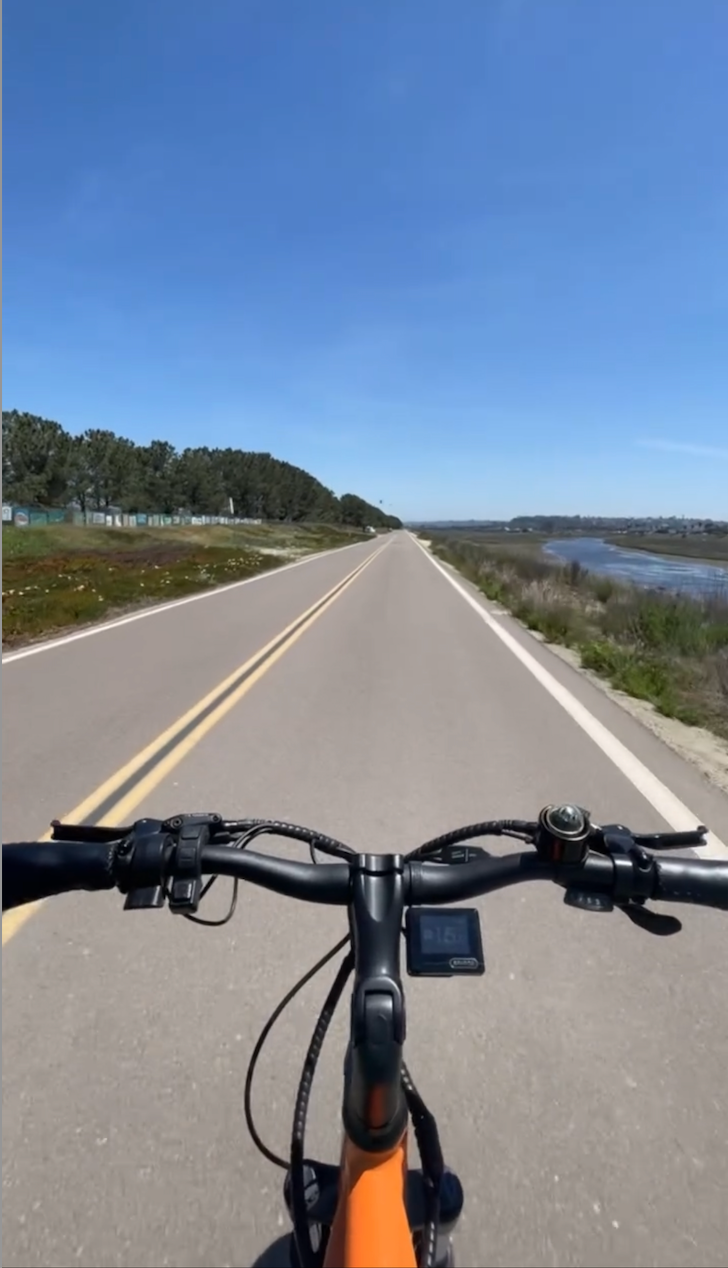
Cycling to the gym takes 10-20 minutes more than driving, time that is more than made up for by not needing to do cardio inside the gym, plus the added benefits of spending time in nature as I ride.
On one memorable occasion, I rode to the gym only to find it was closed. If I had taken that trip in a car I would have been frustrated at the wasted trip, having sat through traffic and used up gas while accomplishing nothing. On my bike, however, I simply turned around and rode home, still happy because I was getting exercise, spending time outdoors, listening to music, and taking in the river, ocean, and neighborhoods around me.
...the pledge to change my behavior was a gift, an opportunity to reevaluate my life.
That's when it truly hit me: I was focusing on the wrong parts of the pledge. I had spent all this time thinking about how the responsibility to reduce carbon emissions was being relegated to the few who care, when instead the pledge to change my behavior was a gift, an opportunity to reevaluate my life. In switching from car to bike for my gym trips I have: increased my mental health, decreased air pollution, saved money, and decreased traffic (just to name a few).
My takeaway is this: when it comes to living sustainably and reducing our carbon footprints, people firstly think about what they have to give up. That there must be a sacrifice made for the greater good. That, as a steward and friend to the Earth, we must take the high road and nobly make our own lives more difficult in the name of saving the planet. I'm here to tell you this isn't true. My individual pledge has changed the way I look at the world, and has had nothing but beneficial outcomes. I've even convinced friends and family to ride to the gym instead of driving.
To anyone in similar shoes, I encourage open-mindedness and self reflection. Through my Carbon Literacy training I was able to make the direct link between carbon emissions and individual actions, and then link it to personal choices. Making the pledge helped change my behavior, which has had a ripple effect on the behaviors of those around me. My life is healthier, I'm spending less time inside, I save money on gas, I breathe less polluted air by not sitting in traffic, and the journey to the gym is now enjoyable rather than mundane or stressful.
Take the leap, make a pledge to reduce your carbon footprint. You never know what other benefits may compound from one simple choice.


Comments